
St. Joseph County Court Record Requests
Start with MyCase. It gives you a public case number and the assigned court. Read the summary, the events list, and any public document links. When you need the official file, a current balance, or a certified copy, the St. Joseph County Clerk or the filing court is the right stop. The general Clerk counter sits in Courthouse 1 at 101 S Main Street, South Bend. Call 574-235-9635.
- Find the case number and court through MyCase, a notice, or the county daily docket.
- List the exact item, such as an order, judgment, complaint, CCS, or decree, and give a useful date range.
- Ask the filing Clerk whether the public item is online, at the counter, in a paper file, or transferred to Archives.
- State whether a plain, certified, or authenticated copy is required. Ask for the current cost and payment method before ordering.
- Use the court’s approved in-person, mail, fax, or electronic route. For an agency record, send the county APRA form to the correct custodian.
No public terminal is promised for self-service. Ask the Clerk instead what workstation or paper access exists. One limit matters: a county APRA request cannot force open a confidential court record, because Indiana court access rules still govern.
Three St. Joseph Record Layers
Name the right layer and a request gets easier. The CCS is the event list. A filed document holds the text behind an event. A certified record is a Clerk-issued copy carrying the required certification or seal.
- Docket or CCS
- The sequence of filed events, settings, notices, and rulings in a case.
- Filed document
- A complaint, petition, motion, exhibit, order, judgment, or other paper in the file.
- Official record
- The version maintained by the court and Clerk, not the MyCase display.
- Certified copy
- A Clerk-issued copy used when another court or agency asks for certification.
- Transcript
- A court reporter’s written record of a proceeding, created only when requested and prepared.
- Archive copy
- A historical, usually noncertified copy from records transferred to Archives.
A docket entry noting an order was filed does not promise the order image is online. And an online image never turns MyCase into the official court file.
Kinds of St. Joseph Court Records
What a St. Joseph County file holds depends on the court and the case type. Circuit and Superior files may include civil complaints, criminal charges, motions, hearing notices, judgments, sentencing orders, and CCS entries. Probate covers estates, wills, trusts, guardianships, adoption, paternity, and juvenile or family matters. Protected case types carry strong limits on public access.
Small claims and traffic matters stay court records. That applies when filed in Superior Court or Walkerton Town Court. South Bend administrative ordinance records begin outside the state trial docket. Appeals go to Indiana's appellate courts. Federal cases run through PACER and the federal clerks. Sort out the court first. Otherwise the request lands with an office that never held the file.
The St. Joseph Clerk’s Filing Office
The Clerk receives filings, keeps case papers, collects court costs, maintains judgments, and issues copies. Judges make the orders and control sealed or confidential access. That split matters in practice. The Clerk can verify a public file. It cannot change an access order or give legal advice.
St. Joseph County Clerk
101 South Main Street
South Bend, IN 46601
574-235-9635
Weekdays, 8:00 a.m. to 4:30 p.m., subject to county holidays.
Route your request with the case identifier. Options include Circuit, Superior civil, felony, misdemeanor, traffic, small claims, Probate, or Walkerton. When the filing court is unknown, give the full case number to the general Clerk line.
Court Records: What They Contain
A public file can hold far more than the online summary. Its exact inventory depends on the matter, the access rule, and whether older papers were digitized.
| Case header | Case number, assigned court, case type, status, file date, and public caption. |
|---|---|
| CCS events | Dated entries for filings, notices, settings, orders, disposition, and other case activity. |
| Pleadings | Public complaints, petitions, answers, motions, and responses when access permits. |
| Orders and judgments | The court’s written rulings, final judgment, or sentencing order where public. |
| Financial entries | Costs, payments, or balances, subject to update and access limits. |
| Related materials | Public attorney, party-role, charge, bond, cross-reference, or related-case fields. |
Financial data on MyCase can be stale. The Clerk supplies the current official figures. Online content may be missing because it is confidential, not yet digitized, or available only at the court.
St. Joseph Archives Record Paths
The St. Joseph County Archives and Records Center at 1140 S Lafayette Boulevard handles historical material it holds. Its research window is generally 8:30 a.m. to 4:00 p.m., and calling 574-235-9091 first can prevent a wasted trip. Archives can scan, email, or mail open noncertified copies when practical.
Local indexes include South Bend divorce records from 1832 through 1984, Mishawaka divorce records from 1980 through 1990, South Bend estates from 1832 through 1988, and Mishawaka estates from 1981 through 1995. An index proves that a listing exists, not that every paper is public or still held there.
The official genealogy request form asks for document type, name or business, case number, event date, and requester contact.
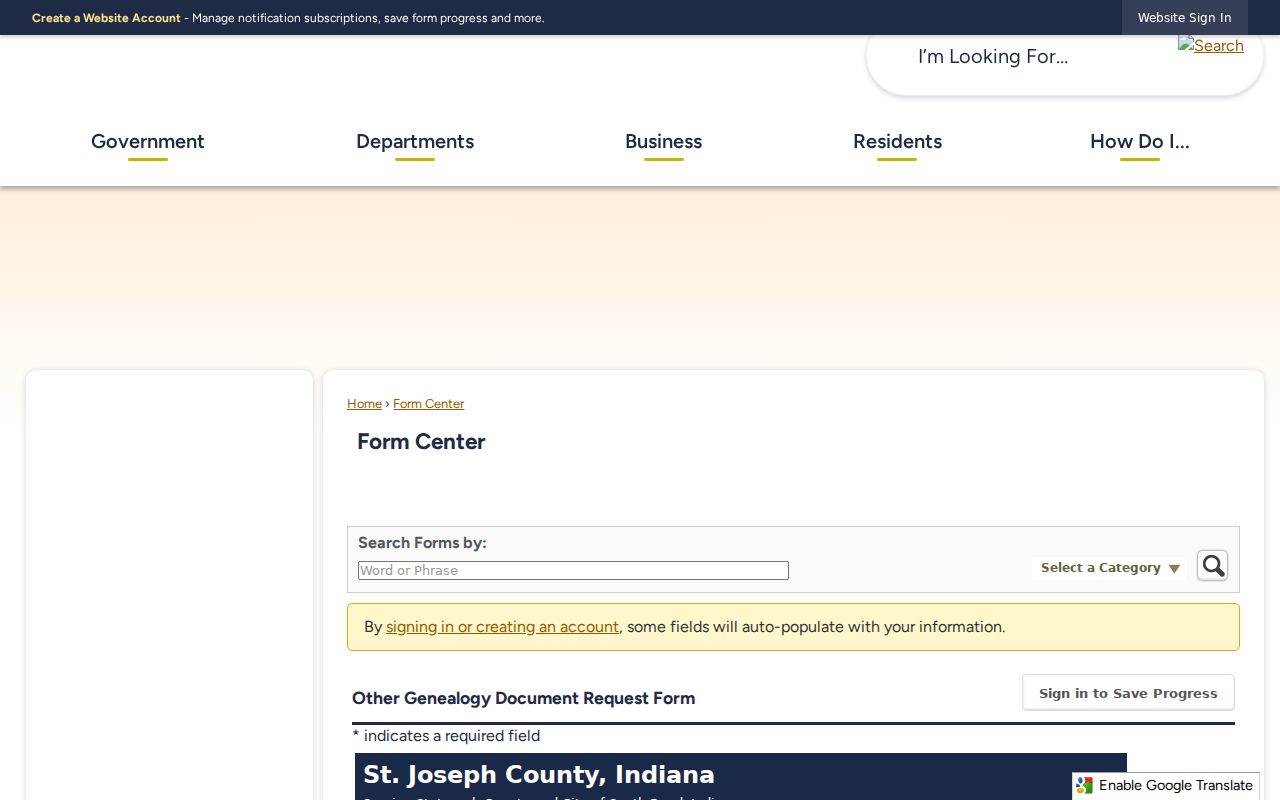
The form supports historical research, but certified records must still come from the Clerk.
Copy Fees and Certification
Open-public, noncertified copies at Archives run five cents per page. The same charge applies in the office, by scan and email, or by mail where possible. Listed payment options are cash, check, money order, and online payment for totals above two dollars. You may use your own device at no copy fee. That holds so long as records are not damaged.
| Record service | Published amount or route |
|---|---|
| MyCase public search | No charge |
| Archives open-public plain copy | $0.05 per page |
| Certified copy | Ask the Clerk for the current fee |
| Transcript | Ask the court reporter about per-page cost and payment |
| Bulk court data | Use the state Rule 9(F) fee schedule and agreement |
Do not apply the Archives rate to a certified decree or a current court file. No single certification price is published. Certification changes the issuing office and likely the cost, so state why you need it before ordering.
St. Joseph Divorce and Transcript Requests
The Archives divorce form separates Divorce or Dissolution from Property Settlement. It also separates Court File from All. Expect to supply names, an approximate month and year, a cause number if known, and contact details. A certified decree routes to the Clerk instead. That keeps an archive search from being mistaken for certification.
Transcripts are a separate matter. Proceedings are not transcribed automatically. Ask the court that heard the case. Provide contact information, and expect the court reporter to quote a per-page cost. The Clerk keeps the filed papers, and the reporter prepares the transcript. A hearing event in the CCS is not itself a transcript.
Access Rules for Court Records
Indiana starts from openness. Under Access to Court Records Rule 4, St. Joseph County court records are open to the public. That holds unless Rule 5 steps in. Rule 5 shuts entire cases, single documents, and personal details away. Sealed cases, mental-health matters, confidential juvenile proceedings, protected witness or victim data, treatment records, and certain reports fall on that list. Open access does not oblige the courts to post every document online. The official Rule 5 text spells out each excluded class of records.
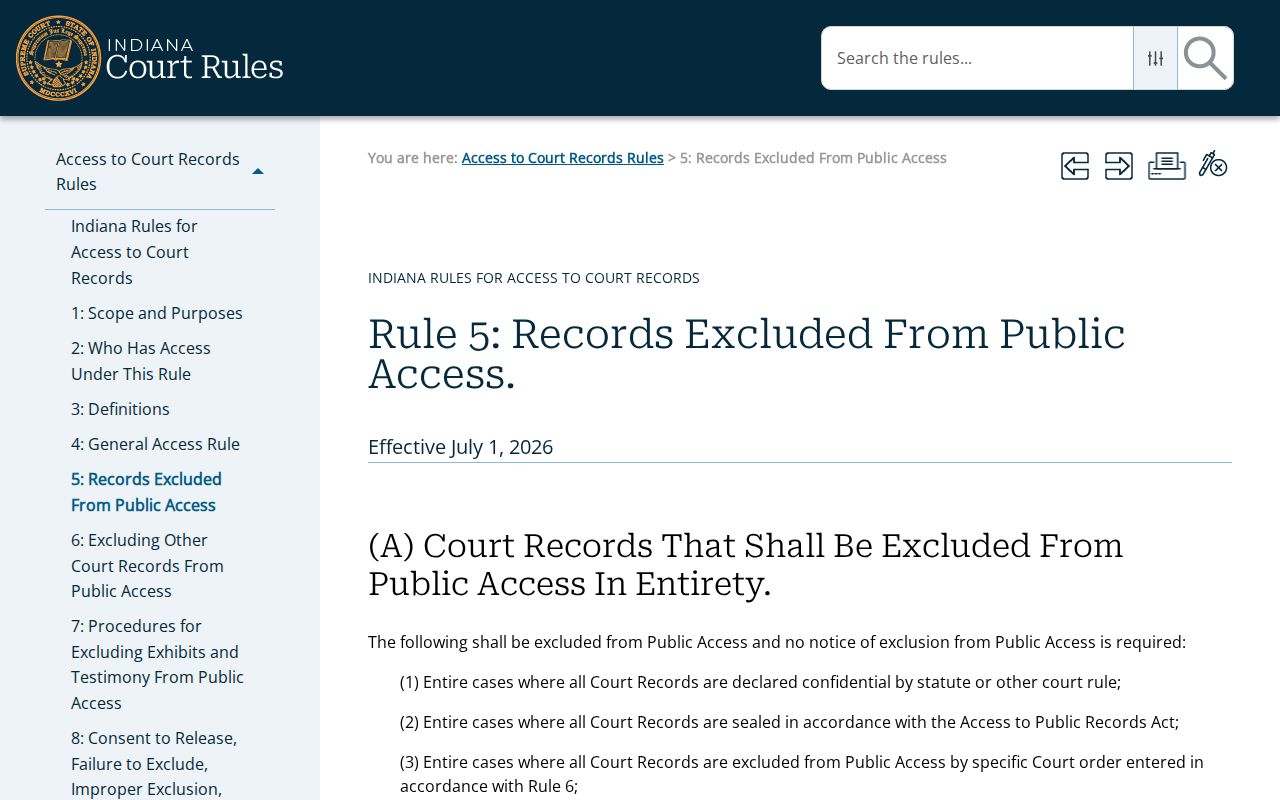
The rule helps explain an absent file without revealing the protected content.
Public does not mean fully online. Ask the filing Clerk whether a nonconfidential document is available in person when MyCase shows only an event.
Indiana’s Access to Court Records Rules govern judicial files alongside APRA’s rules for public-agency records.
Extraordinary St. Joseph Record Access
Some excluded records can still be requested. Rule 9 builds a court process for extraordinary circumstances. It demands real work from the requester. The filing goes to the court with jurisdiction as a verified written request. It must explain the public interest and address harm and prejudice. It must also give required notice and attach proof that notice was served. Noticed parties usually get time to respond. From there, the court can deny the request outright or set a public hearing. Before granting access, the court must issue a written order. That order states reasons and makes the required findings. It may also limit later use or disclosure of the record. The official Rule 9 procedure holds the controlling details.
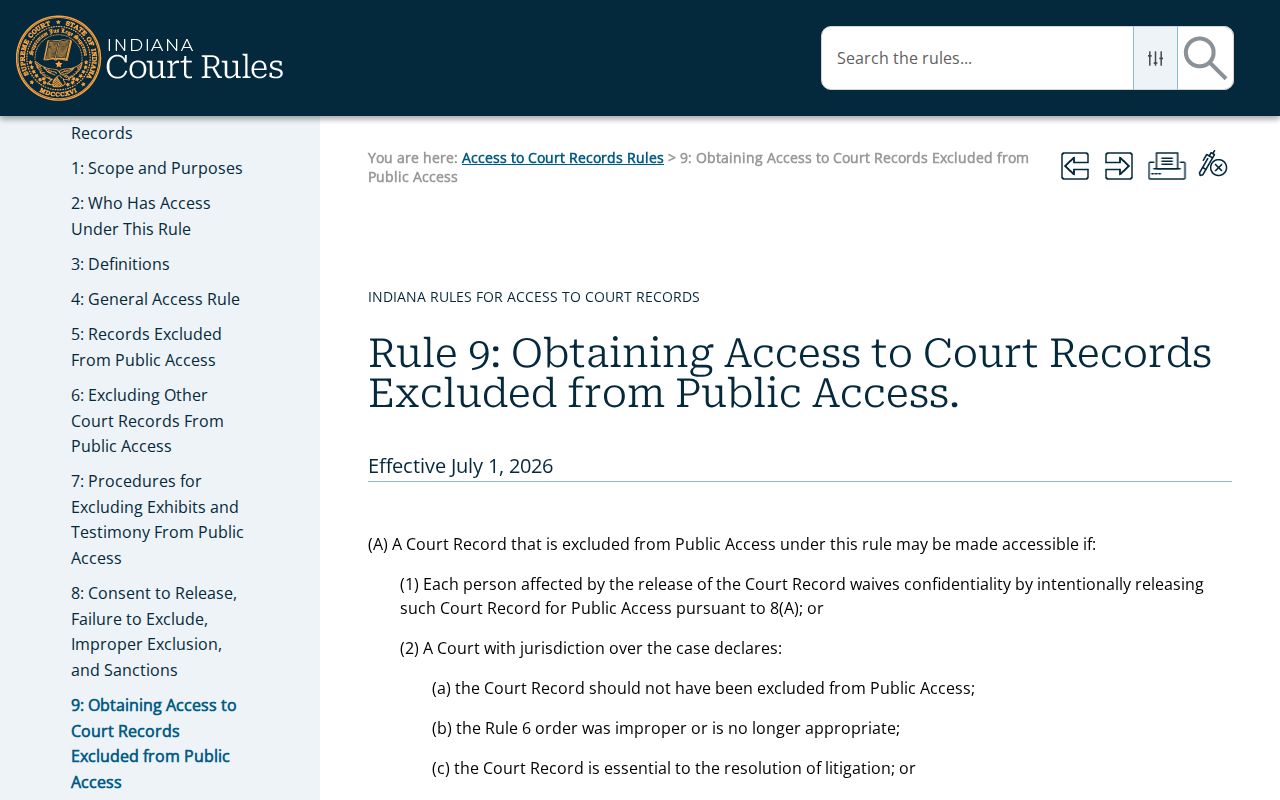
This route is not a routine copy request. It also cannot override other state or federal confidentiality laws. Notice sits at the heart of it. The requester must tell the parties and anyone else the court names. Then the requester files proof of notice or explains why notice should be excused. A noticed person is entitled to respond. If the court reaches the merits, it balances public access against privacy, harm, and prejudice. It then issues written findings. A standard Clerk copy request asks for none of this. That is because it involves a record already open to the public.