
St. Joseph County Civil Docket Searches
Start with Indiana MyCase. A known cause number is the strongest key. No number? Use the Name tab for a person or business, or Attorney for a lawyer's name or bar number. Pick St. Joseph County and the Civil category. Family and Probate are separate category choices, so a civil name search can miss a case when the wrong box stays checked.
Trim a broad result set with Open or Closed status and a filing-date range. Results cap at 1,000 and normally display 20 per page. Sorting by case number, file date, case style, or status date can help you spot the right CCS. MyCase is free and public. Still, it is not the official court record.
- Choose the Case, Name, or Attorney tab.
- Select St. Joseph County and the right civil, family, or probate category.
- Enter the narrowest known name, number, or date fields.
- Compare the case style, court, type, filed date, and status.
- Open events and ask the filing clerk for documents or certification when required.
St. Joseph Civil Document Boundaries
The MyCase access matrix separates orders from other filings. It also splits online access from in-person access. Many ordinary civil codes allow nonconfidential orders and documents online. Domestic-relations categories can hold orders that stay off the remote screen. Even then, an in-person public route exists. A docket event with no image attached does not prove the filing is missing from the official file. The access-matrix page lays out that key distinction.
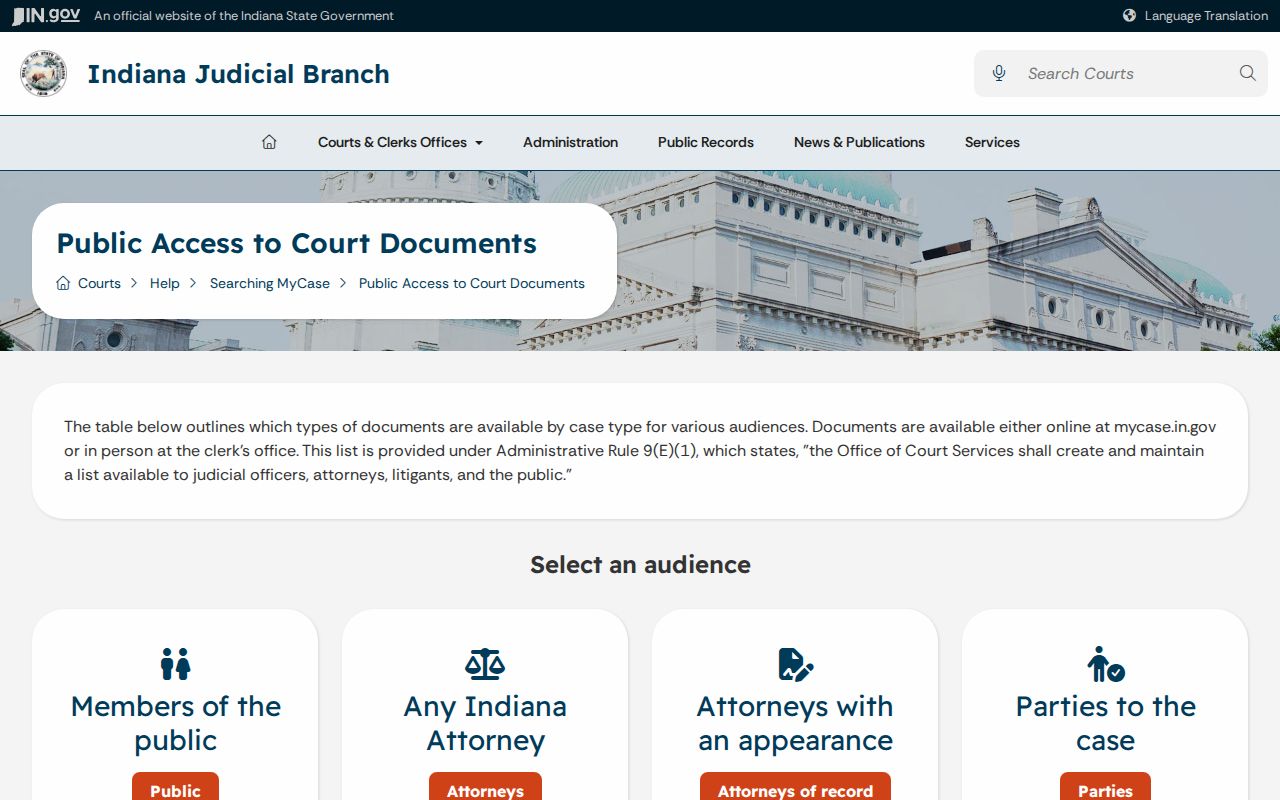
Treat the matrix as a route map. Then ask the specific St. Joseph County filing court about any public document that will not open online.
Civil Dockets: What They Show
The Chronological Case Summary is the dated civil register. It can show the complaint or petition, summons, service, answer, counterclaim, motions, mediation or referral, continuances, hearings, orders, judgment, satisfaction, costs, and appeal events. The case style names the matter. The case type code identifies its procedural category.
| Cause number | A code such as 71C01-2608-CT-000123 for county, court, period, type, and sequence. |
|---|---|
| Case style | The caption, which may change after amendment or coordination. |
| Filed date and status | The opening date and current open or closed label. |
| Service | Entries about summons, attempted service, or returned service. |
| Events | Motions, conferences, hearings, continuances, orders, and judgment. |
| Documents | Public links when remote access is permitted, or a title without an image. |
A CCS entry is not a certified order. Certification comes from the Clerk. Current balances and the complete maintained file come from the court too, not from a cached public screen.
Read the sequence, not one isolated row. A complaint may be followed by failed service, later service, an answer, a motion, and an order. Only later entries reveal whether a requested step was granted, denied, reset, or left pending.
St. Joseph Civil Codes Explained
Indiana case codes keep the civil paths distinct. CC is civil collection, CT is civil tort, DC is domestic relations with children, DN is domestic relations without children, PL is plenary, SC is small claims, EV is eviction, and MF is mortgage foreclosure. CE, MI, PO, RA, RS, TP, TS, and XP cover other defined paths. Probate and family codes get their own MyCase filters.
- CCS
- The court's date-ordered event register.
- Plenary
- A general civil action coded PL.
- Case style
- The formal caption naming the civil matter.
- Service
- Recorded delivery or attempted delivery of court papers.
- Satisfaction
- An entry stating that a judgment obligation has been met.
Related family cases can be coordinated or transferred while keeping separate docket numbers. Search each known number rather than expecting one merged civil docket.
What Cases Fill the Civil Docket
St. Joseph County civil court dockets cover collections, torts, contracts, property disputes, mortgage foreclosures, evictions, small claims, and other plenary matters. Family and probate matters are civil in a broad sense but sit in separate categories with distinct access limits. Protection-order matters call for care too. Ordinary MyCase name search does not expose protected identifiers.
| Case route | Common code | Local starting point |
|---|---|---|
| Collection | CC | Circuit or Superior civil assignment |
| Tort | CT | Circuit or Superior civil assignment |
| Plenary | PL | County civil division |
| Small claims | SC | South Bend or Mishawaka Small Claims |
| Eviction | EV | County small-claims docket |
| Probate matter | Probate code | 71J01 at the Juvenile Justice Center |
The code helps identify a route; the assigned judge, court identifier, and CCS events control the actual case.
St. Joseph Small Claims Split
Small claims run through St. Joseph Superior Court. But the location may be South Bend Courthouse 2 or the Mishawaka County Services Building. The South Bend small-claims line is 574-235-9794. Mishawaka small claims is 574-256-6215. This is a county court split, not proof that Mishawaka runs a separate municipal court.
Search MyCase under St. Joseph County and read the court and event details. If a setting location is unclear, call the listed division before you travel. The civil clerk at Courthouse 1 can be reached at 574-235-5485. The Clerk's main number is 574-235-9635. Ask about counter review rather than assuming a public terminal.
Hearings on the Civil Docket
A civil setting can take many forms. It might be a status conference, motion hearing, mediation-related event, pretrial conference, bench trial, jury trial, damages hearing, or review. Never treat every date as the final trial. Read the setting type, date, time, location, judge, and any later continuance or cancellation entry.
Service and response deadlines can shape what comes next. But the docket is a record, not legal advice. A motion filing does not mean it was granted; look for the later order. A judgment entry does not always show payment, since satisfaction may be filed later. The county daily docket and MyCase can help confirm a setting. The assigned clerk or court is the fallback for a date that looks incomplete.
E-Filing St. Joseph Civil Dockets
Attorneys and other approved filers submit St. Joseph County civil filings through Indiana's electronic filing system. It is not a way for the public to search court dockets. Once a filing is accepted, it enters the official court record. It can then produce events in the CCS. Whether the public sees those filings depends on the case type, the document, and current access rules.
The official Indiana e-filing page explains the machinery behind civil submissions in detail.
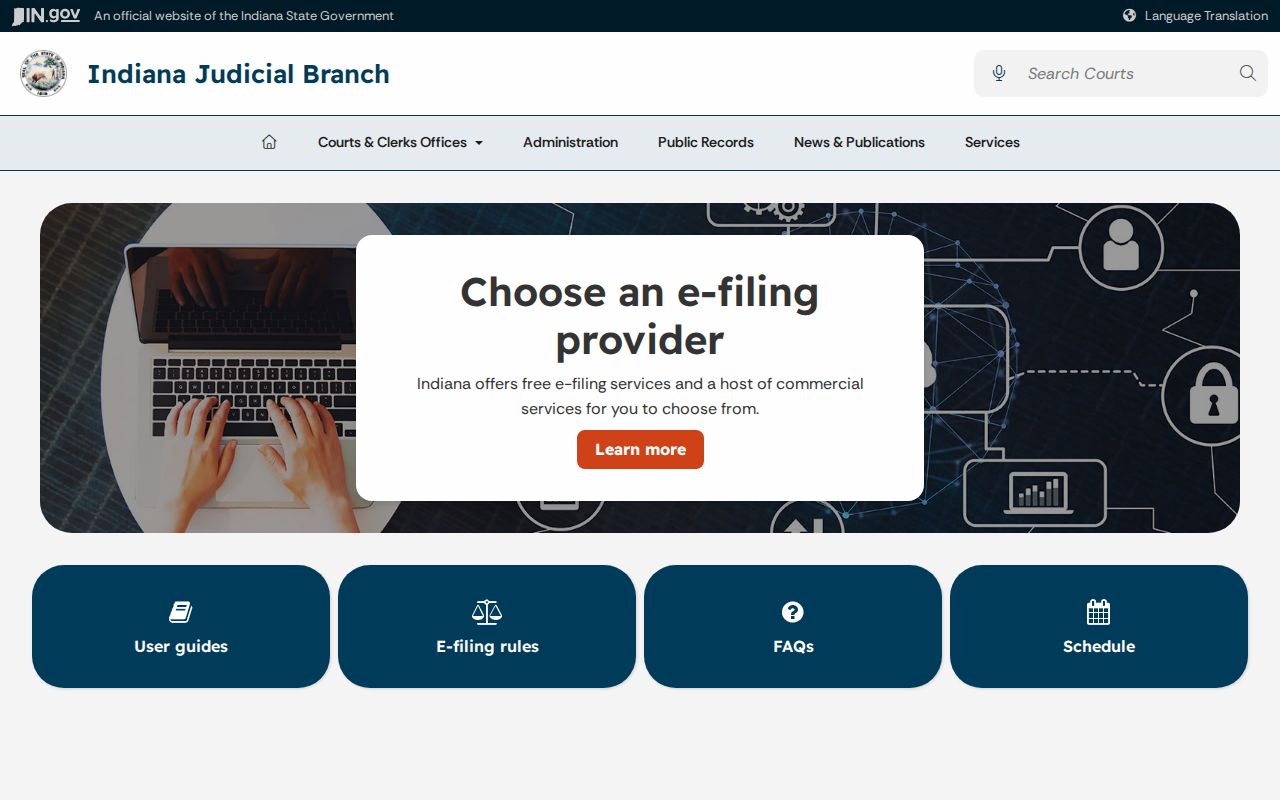
A confirmation from your filing provider is not the same as a public MyCase entry. The two serve different jobs. MyCase handles case lookup; the provider only handles authorized submission.
Need help with providers and confidential filing methods? The state's e-filing help page lays out the options. It is the practical companion to any civil docket search.
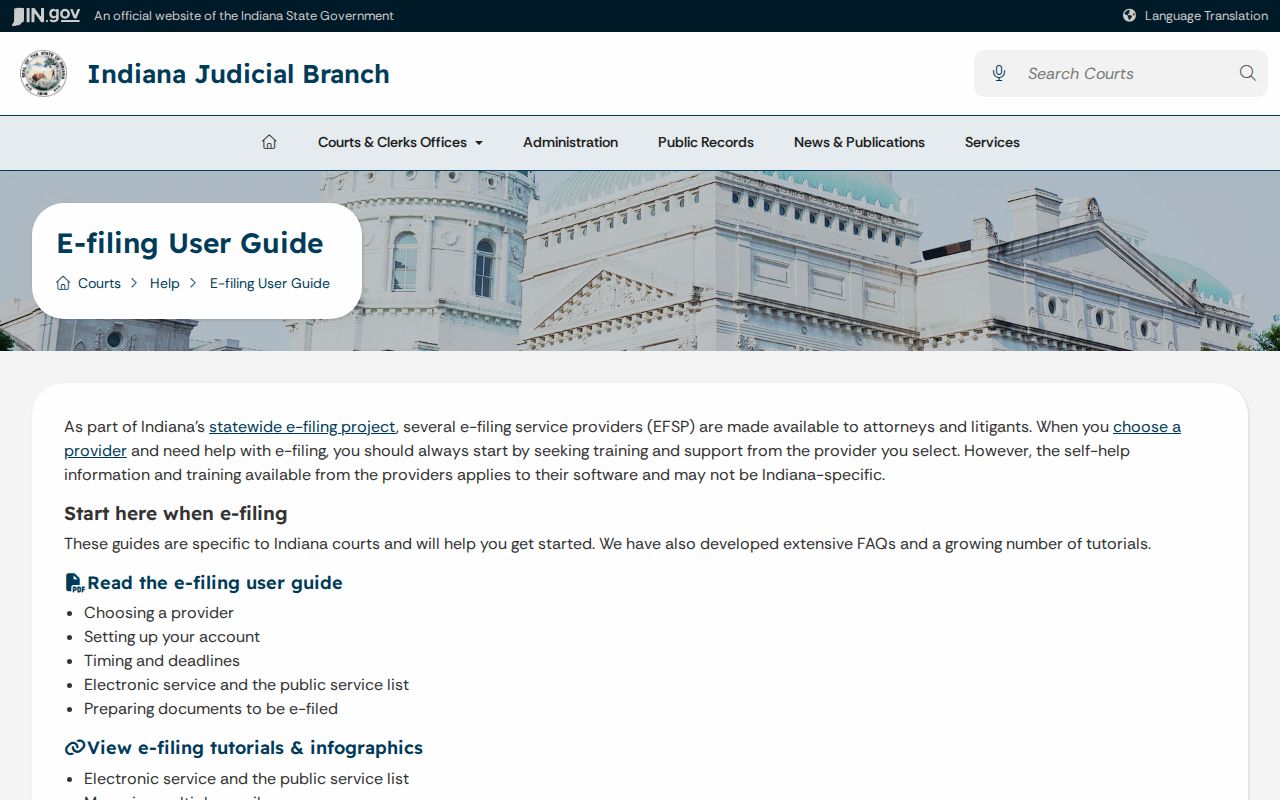
Confidential filing tools exist so filers can meet court rules. They do not open excluded material to the public.
St. Joseph Civil Court Assignments
Civil jurisdiction in St. Joseph County is split between the Circuit and Superior Courts. The split follows a local assignment plan. Four Superior judges are designated for civil work. Circuit keeps its own civil categories plus a Mishawaka division. The main civil courthouse is Courthouse 1 at 101 S Main Street. Mishawaka civil and plenary matters sit at Courthouse 4. That is the County Services Building at 219 Lincolnway West. Probate belongs to the separate 71J01 court at the Juvenile Justice Center.
City names alone do not decide assignment; the local rules do. The state's local-rules orders collection publishes the official assignments.
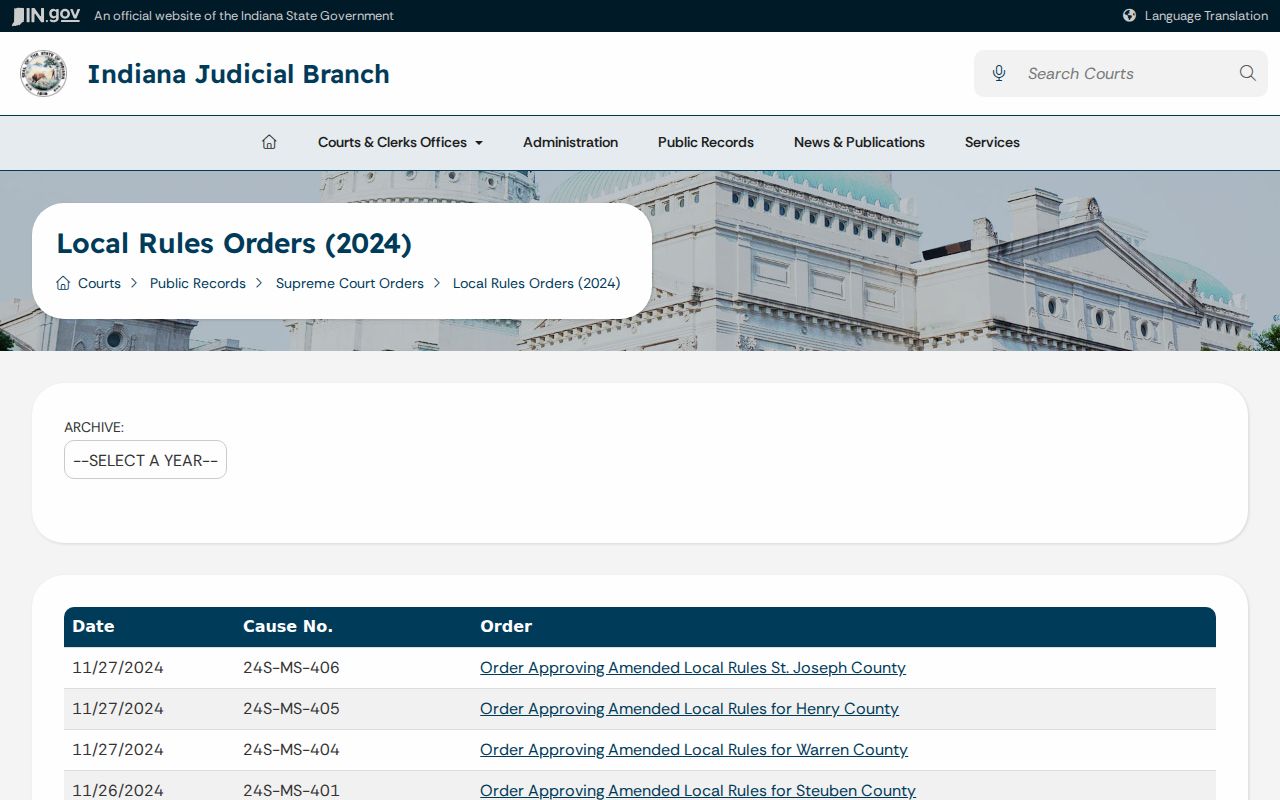
Before picking a counter, read the court identifier and the location setting in the CCS. A St. Joseph County civil file might live in South Bend, Mishawaka, Small Claims, or Probate.
The statewide e-filing schedule adds context on which courts accept electronic filing and when it becomes mandatory. It rounds out the picture for anyone checking civil court dockets.
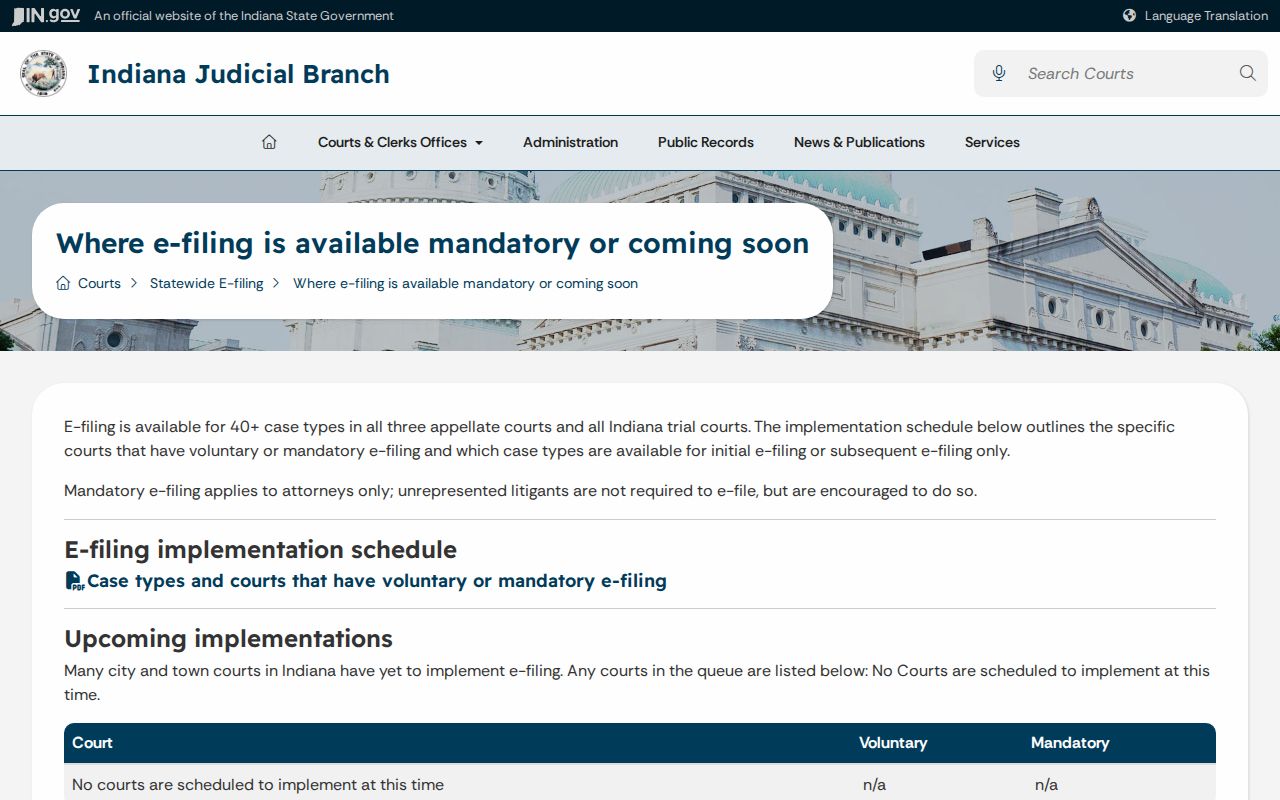
That schedule covers filing operations only. It does not replace MyCase or the clerk's public-copy process.
Who Can See Civil Dockets
Indiana Access to Court Records Rule 4 presumes that court records are open to the public. That is the default. Rule 5 then carves out excluded records and personal information. Public access does not mean every document appears online. Family, juvenile, mental-health, adoption, and protected information may be limited or absent. A sealed record is not the same as one that simply lacks a remote image.
Use the right request route. Ask the filing clerk for a court-file copy or certified order. Use the county APRA process for agency-held records. APRA does not override the Supreme Court's court-record rules.
In person, your options depend on which office holds the file. Courthouse 1 handles civil, and Courthouse 2 handles small claims. Courthouse 4 in Mishawaka serves its area. The Probate Clerk works from the Juvenile Justice Center, and Archives holds the older material. Divorce and genealogy requests may go through Archives forms. Mail, fax, email, payment, and transcript methods vary by office. Certified copies always come from the Clerk.
If a record is excluded, Rule 9 offers one path. That path is a verified extraordinary-access request filed with the court. It demands legal findings and promises nothing. Bulk civil information runs through the Indiana OJA Rule 9(F) application. That application is subject to confidentiality limits, agreements, resources, and possible fees. And do not scrape MyCase.